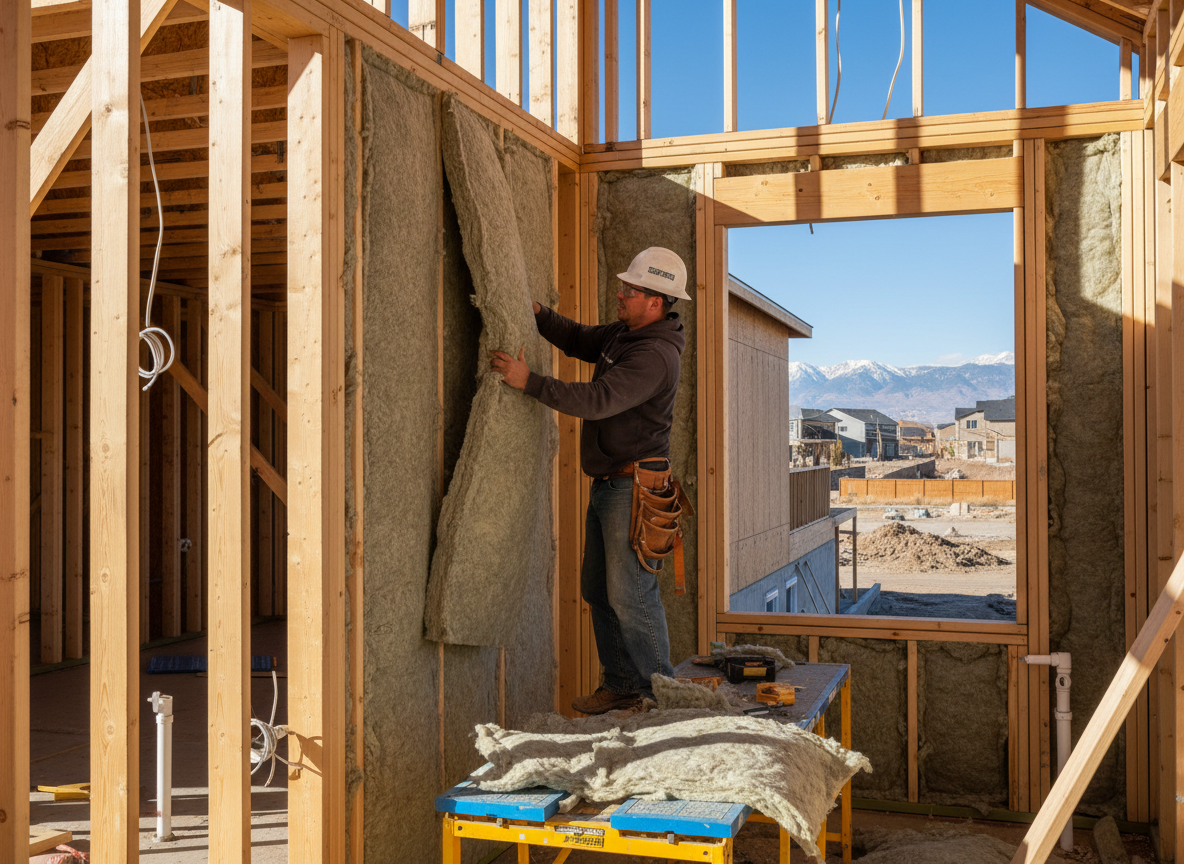
Midvale's older housing stock in Old Town Midvale and Bingham Junction often features plaster-over-lath or early wood-frame walls that lose heat quickly once winter temperatures drop below freezing. Retrofitting these walls requires careful drilling and dense-pack cellulose or fiberglass to avoid disturbing original plaster while sealing air leaks around windows and outlets. Homes near the Bingham Junction TRAX Station frequently sit on sloped lots where soil movement can crack exterior sheathing, so any insulation job must include a moisture check to prevent condensation inside the cavity during the warm summer months that follow.
Salt Lake County building practices from the 1960s through 1980s left many walls in Murray and West Jordan with minimal or settled insulation. Adding material today means pulling outlets, checking for knob-and-tube wiring, and using infrared scans to locate voids without opening large sections of drywall. The semi-arid climate brings wide daily temperature swings, so proper vapor retarders on the interior side stop summer humidity from reaching cold sheathing in winter and creating mold behind the new insulation.
Homeowners in Midvale often discover that wall insulation changes how their forced-air systems perform because previously leaky walls now force air through ducts instead of cracks. This can reveal undersized returns or dirty filters that were masked by the original drafts. A thorough job includes sealing top plates and bottom plates where they meet the attic and crawlspace, especially on homes near Midvale City Park that sit exposed to prevailing winds off the valley floor.
Technician insight
In Midvale, the thing that catches most people out with wall insulation is the 1950s brick homes in Old Town Midvale where the semi-arid winters drive moisture through the brick and into the cavity if you don't leave a proper air gap behind the new material.
Hidden voids behind plaster walls
A homeowner in Bingham Junction noticed uneven heating on the north side of the house. We found large empty cavities behind the original plaster where prior insulation had settled. We dense-packed cellulose through small access holes, sealed the plates, and the rooms now hold temperature evenly through the cold nights.
How it works
- 1
Site Assessment
Technician inspects exterior walls, checks for wiring and plumbing, and uses a thermal camera to map temperature differences across the home in Bingham Junction or Old Town Midvale.
- 2
Material Selection
Choose dense-pack cellulose or closed-cell foam based on wall depth, existing vapor barriers, and exposure to Salt Lake County winter freeze-thaw cycles.
- 3
Installation
Drill access holes, fill cavities from bottom to top, and seal every penetration while protecting finished surfaces in the living space.
- 4
Final Verification
Reinstall outlets, patch holes, and perform a follow-up scan to confirm uniform coverage before cleanup.
Pricing
Cost depends on wall accessibility, insulation type, and home size; we provide an upfront written quote after the site visit.