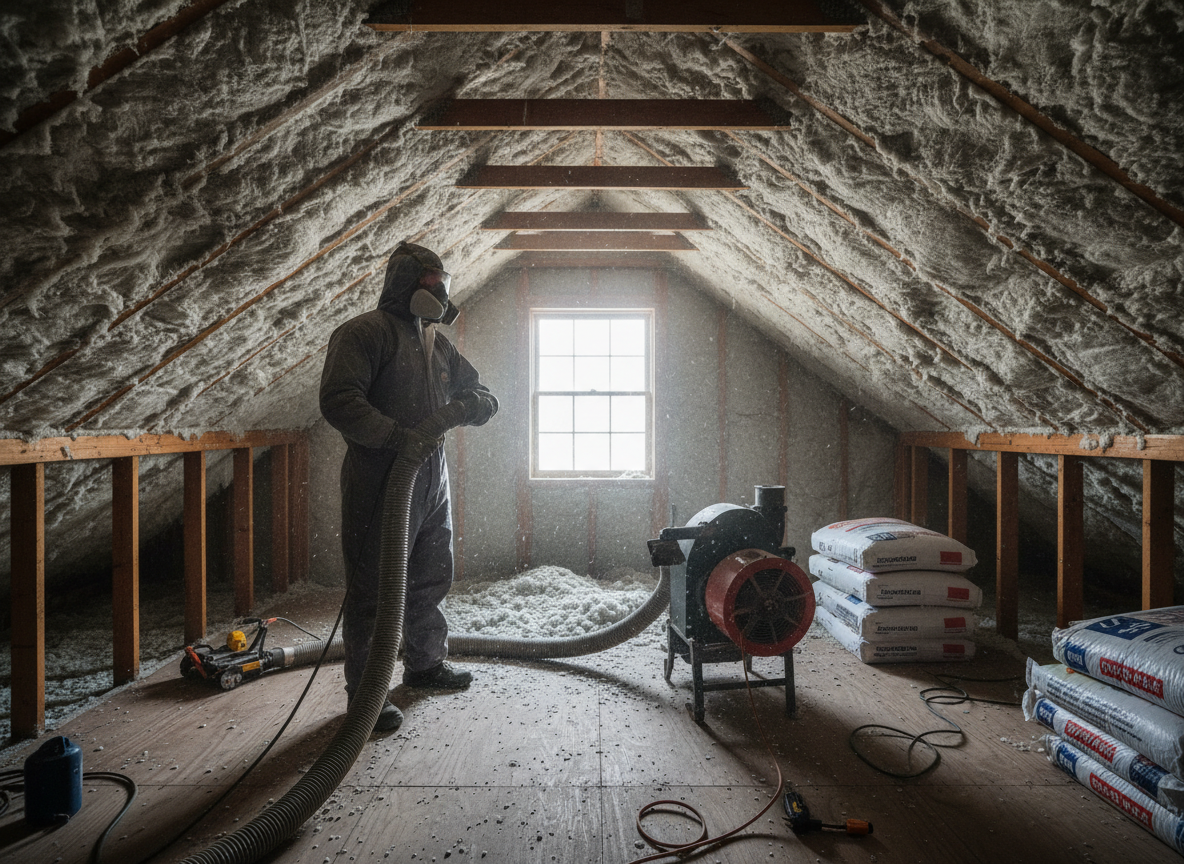
Midvale homes in neighborhoods like Old Town Midvale and near Bingham Junction TRAX Station often date to mid-century builds with minimal original insulation. Semi-arid conditions bring cold winters that drive heat upward through uninsulated attics and warm summers that increase cooling loads. Proper material choices such as dense-pack cellulose or fiberglass batts must account for existing venting and any knob-and-tube wiring common in Salt Lake County stock. Skipping a full inspection before install can leave gaps that reduce performance once winter temperatures drop.
Work near Midvale City Park or in areas bordering Murray and West Jordan requires attention to roof pitch and attic access points that vary by home age. Blown-in methods suit many tract homes but demand careful baffling around eaves to maintain airflow. Homeowners sometimes overlook how soil movement in the valley affects foundation settling and indirect air leaks into the attic plane. Addressing these during install prevents callbacks when summer heat builds or winter drafts return.
Code requirements in Salt Lake County emphasize minimum R-values suited to the climate zone, yet many older properties fall short. Technicians must verify existing depth and type before adding material to avoid compressing insulation or trapping moisture in the dry air. Upgrades in Bingham Junction homes frequently include sealing around recessed lights and chimneys that act as heat escape routes during cold snaps.
Technician insight
In Midvale, the thing that catches most people out with attic insulation is older homes in Old Town Midvale where knob-and-tube wiring runs through the joists; cold winters make it easy to miss during a quick look, yet it forces different material handling to stay safe and effective.
Bingham Junction Attic Upgrade
Residents near the TRAX station reported uneven temperatures during winter. Inspection showed thin original insulation and several unsealed penetrations. Added cellulose after sealing gaps while preserving venting. Home now holds heat more consistently through Salt Lake County cold spells.
How it works
- 1
Initial Assessment
Walk the attic and inspect current insulation, venting, and wiring while noting home age and roof type.
- 2
Material Selection
Choose appropriate insulation based on existing conditions and Midvale winter heat loss patterns.
- 3
Preparation and Sealing
Address air leaks around penetrations and ensure baffles remain clear before adding material.
- 4
Installation and Verification
Apply insulation evenly and confirm coverage meets local performance needs.
Pricing
Upfront quotes provided after on-site inspection; costs vary with home size, access, and current insulation depth.