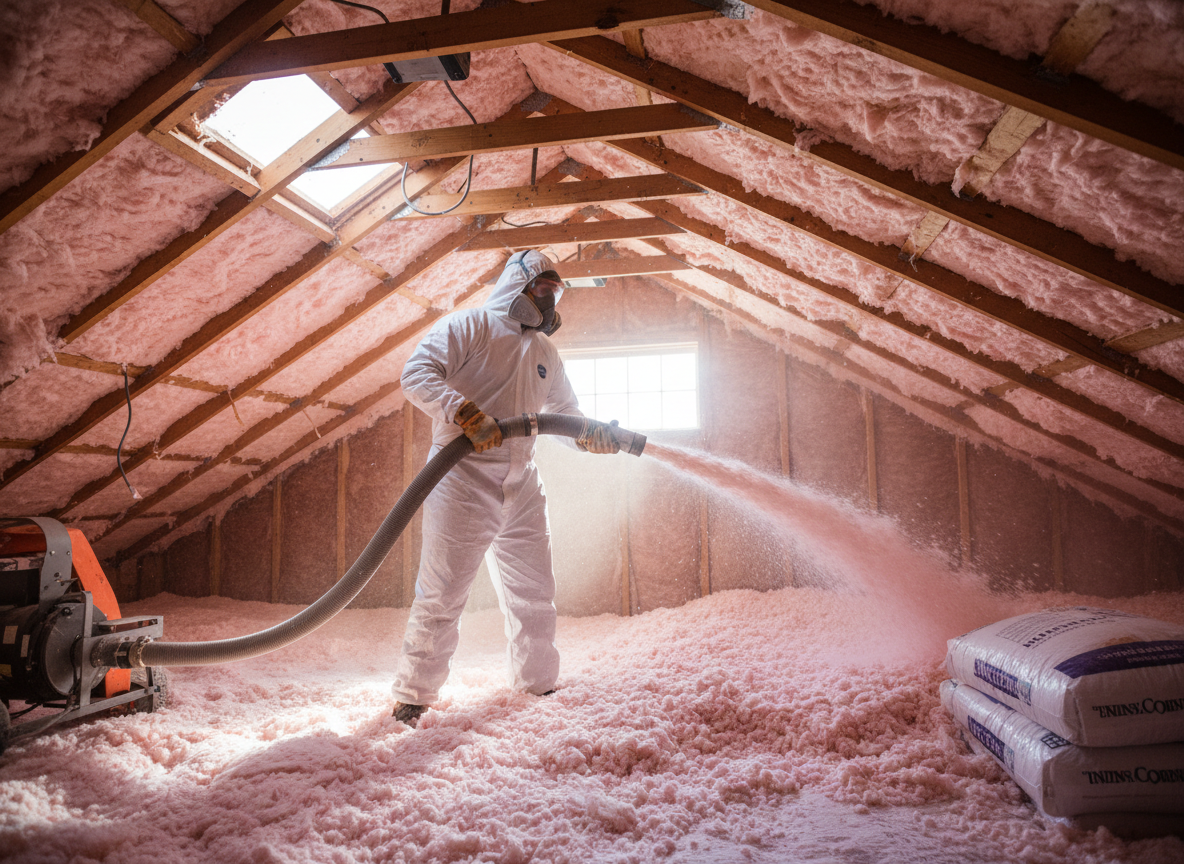
Midvale homes built before the 1980s in Old Town Midvale and near Bingham Junction often have open-rafter attics with limited access points. Fiberglass batts must be cut to fit around existing wiring and HVAC runs without compression. In Salt Lake County the winter lows push heat upward, so R-38 or higher is common in the flat ceiling areas while cathedral sections need separate treatment to avoid ice dams on the north-facing slopes.
The semi-arid climate brings large daily temperature swings. Warm summer days followed by cold nights create condensation risk if a vapor retarder is omitted on the warm side. Installers working from the 75 Fort Union Blvd location routinely check for bathroom and kitchen exhaust fans that terminate in the attic; these must be ducted to the exterior before any fiberglass is placed or moisture will saturate the insulation within one season.
West Jordan and Murray homes that back up to the Jordan River corridor can experience slightly higher humidity. Fiberglass in these attics is often paired with ridge and soffit vents to maintain airflow. Crews avoid stapling batts too tightly against the roof deck, leaving the required air channel so warm air can escape rather than melting snow unevenly and causing leaks at the eaves.
Technician insight
In Midvale the thing that catches most people out with fiberglass insulation is the way older homes near Bingham Junction TRAX Station have shallow attics and original knob-and-tube wiring. Homeowners try to stuff batts over the wires and end up creating hidden heat traps that force us to pull everything back out and start over.
Old Town Midvale Attic Moisture Fix
Homeowner noticed higher heating bills after a cold snap. We found compressed fiberglass over bathroom exhausts that had never been ducted outside. We rerouted the vents, removed the wet insulation, and installed new unfaced batts with proper baffles. The attic now stays dry through winter temperature swings.
How it works
- 1
Attic Assessment
Measure square footage, note existing insulation depth, locate all penetrations, and check for knob-and-tube wiring common in Old Town Midvale homes.
- 2
Ventilation and Moisture Prep
Confirm soffit and ridge vents are clear, extend exhaust ducts to the exterior, and install baffles where needed to maintain airflow channels.
- 3
Batts Installation
Cut and fit unfaced or faced fiberglass between joists, butt edges tightly, and seal any gaps around pipes or recessed lights with compatible material.
- 4
Final Air Sealing and Cleanup
Seal top plates and penetrations, verify no insulation blocks recessed fixtures, and remove all debris before leaving the site.
Pricing
Cost depends on attic accessibility, existing insulation removal needs, and whether baffles or extra sealing are required in older Midvale stock.