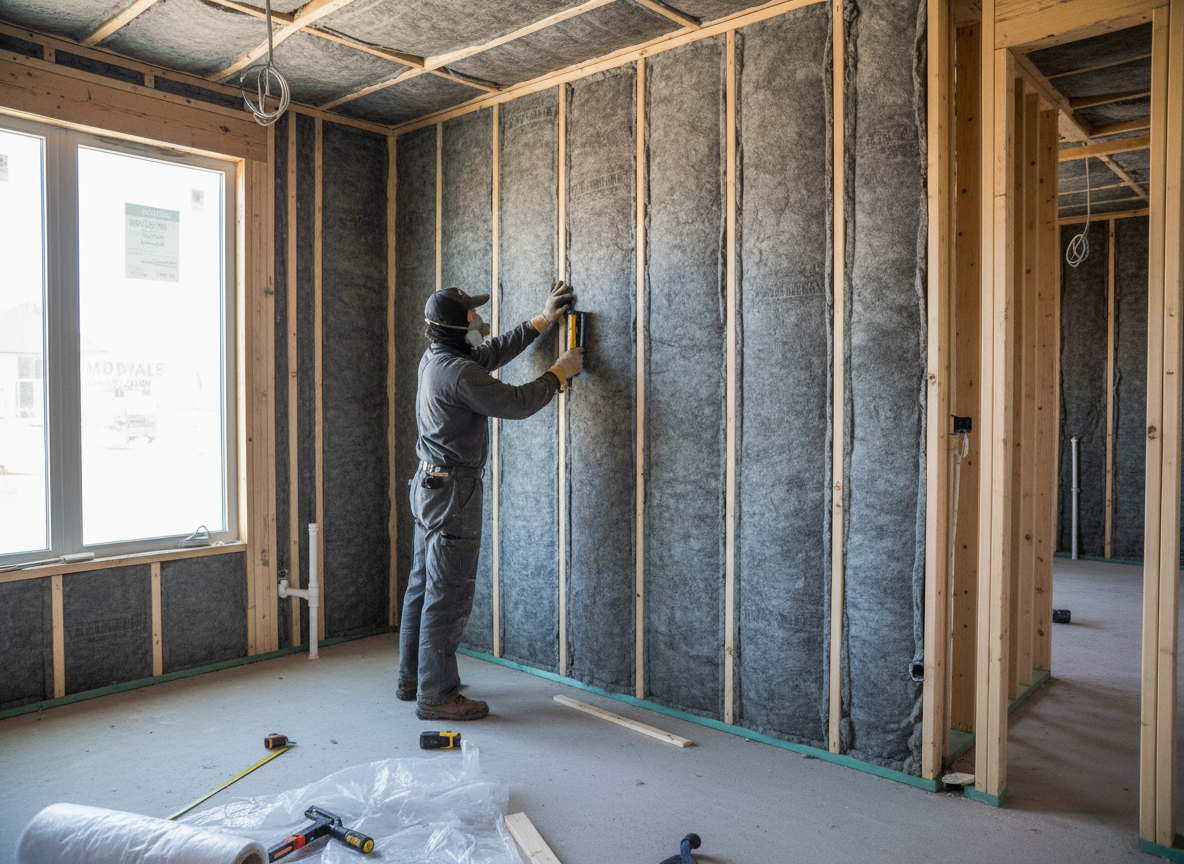
Midvale homes in Old Town and near Bingham Junction TRAX Station often sit close to rail lines and busy roads in Salt Lake County. Cold winter nights and warm summer days create expansion and contraction cycles that loosen standard attic fills over time. Soundproof insulation uses dense mineral wool or cellulose packs combined with acoustic baffles to absorb low-frequency rumble that travels through joist cavities. Installers must first map existing knob-and-tube wiring common in pre-1960 builds before adding material, because compression against wires creates fire risk during peak summer heat.
Semi-arid conditions mean low humidity most of the year, so vapor barriers go on the warm side only in winter months to prevent condensation when cold air hits the roof deck. Homes in Murray and West Jordan border areas frequently have cathedral ceilings that limit access, requiring blown-in dense-pack methods rather than batts. Edge cases include shared attics in duplexes where sound flanking paths run through party walls, demanding perimeter sealing at the top plate before insulation begins.
Salt Lake County building codes require R-49 minimum in attics but add no specific sound transmission rules, so crews follow STC ratings homeowners request. Proper installation includes sealing all penetrations around vents and recessed lights to stop noise leaks that standard fiberglass misses. Workers check for rodent damage first, since trails through existing insulation create direct sound paths that must be blocked before new material goes in.
Seasonal Timing Considerations
Install soundproof insulation in Midvale during shoulder months when attic temperatures stay moderate. Winter installs risk material clumping from moisture, while midsummer heat makes dense-pack work slow and uncomfortable for crews working above Old Town homes.
Technician insight
In Midvale, the thing that catches most people out with soundproof insulation is the irregular joist spacing in Old Town homes built before 1950, where standard batts leave gaps that let TRAX rumble travel straight through during cold winter nights when the house is closed tight.
TRAX Noise Near Bingham Junction
A homeowner in Bingham Junction reported constant low train rumble through the ceiling. Inspection showed thin fiberglass with open gaps along the eaves. We added dense mineral wool packs and sealed the top plate. The homeowner noted the difference immediately once winter winds returned.
How it works
- 1
Attic Assessment
Inspect joist spacing, wiring, and existing insulation in Midvale homes to identify noise paths from nearby TRAX lines.
- 2
Material Selection
Choose dense mineral wool or cellulose based on home age and access in Old Town or Bingham Junction properties.
- 3
Sealing and Prep
Close gaps around vents, lights, and top plates to stop flanking noise before adding soundproof layers.
- 4
Installation
Pack or blow material to required density while maintaining ventilation channels suited to semi-arid winters.
- 5
Final Check
Verify coverage and test for remaining sound transmission from streets or rail corridors.
Pricing
Pricing varies by attic size, access difficulty, and material density; we provide upfront quotes after inspection.