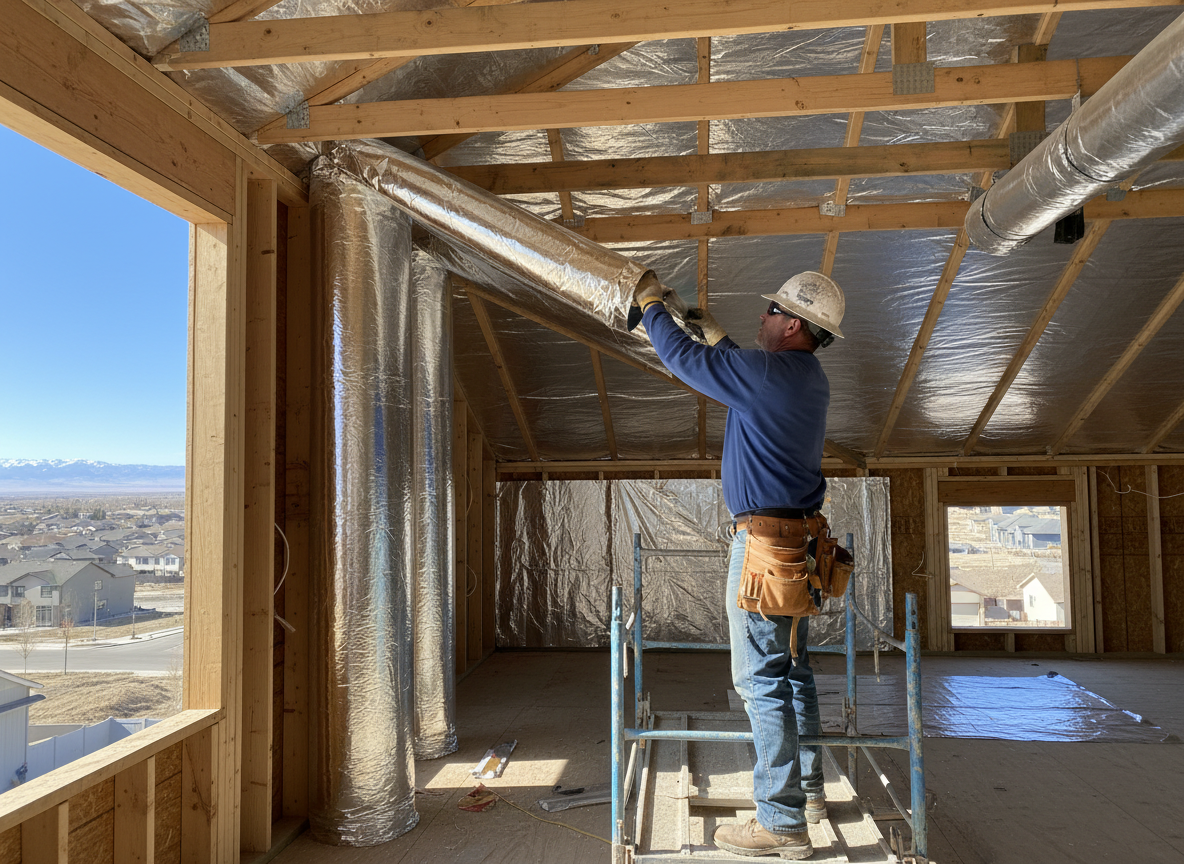
Foil insulation, often called a radiant barrier, uses reflective aluminum layers to redirect heat rather than absorb it. In Midvale homes near the Bingham Junction TRAX Station or Old Town Midvale, this matters because semi-arid conditions bring sharp temperature swings between cold winters and warm summers. Proper installation requires leaving an air gap so the foil can perform, and technicians must check existing ventilation to avoid trapping moisture that could affect older Salt Lake County roof decks. Homes in nearby Murray and West Jordan often show similar needs when attics have limited access points or mixed insulation layers already present.
Edge cases include attics with recessed lighting or HVAC ducts where foil must be cut and sealed carefully to maintain the reflective surface. In Salt Lake County, winter cold can cause condensation if the barrier blocks necessary airflow, so experienced crews always verify soffit and ridge vents before starting. Foil works best when paired with existing insulation rather than replacing it, and crews inspect for pest damage or wiring issues that could complicate placement around the Midvale City Park area.
Local Climate Considerations
Foil performs differently once winter temperatures drop in Midvale compared to summer heat gain. Crews focus on sealing edges tightly while preserving ventilation paths that older homes in Bingham Junction often lack.
Technician insight
In Midvale, the thing that catches most people out with foil insulation is older homes in Old Town Midvale where narrow attic hatches and low clearances near Bingham Junction make full coverage tricky, especially when cold winters increase the risk of moisture buildup if vents get blocked.
Bingham Junction Attic Upgrade
Homeowner in Bingham Junction noticed uneven heating during Salt Lake County winters. Inspection showed missing radiant protection over the main living area. We installed foil insulation while preserving all existing vents. Temperatures stabilized without added condensation issues.
How it works
- 1
Attic Assessment
Inspect current insulation, ventilation, and access points in the Midvale attic.
- 2
Material Preparation
Cut foil sheets to fit around ducts, lights, and structural elements while maintaining air gaps.
- 3
Installation
Secure reflective foil with staples or tape, ensuring full coverage without blocking vents.
- 4
Final Check
Verify airflow, seal seams, and confirm no gaps remain near Old Town Midvale rooflines.
Pricing
Upfront quotes based on attic size, access, and existing conditions in Midvale homes.