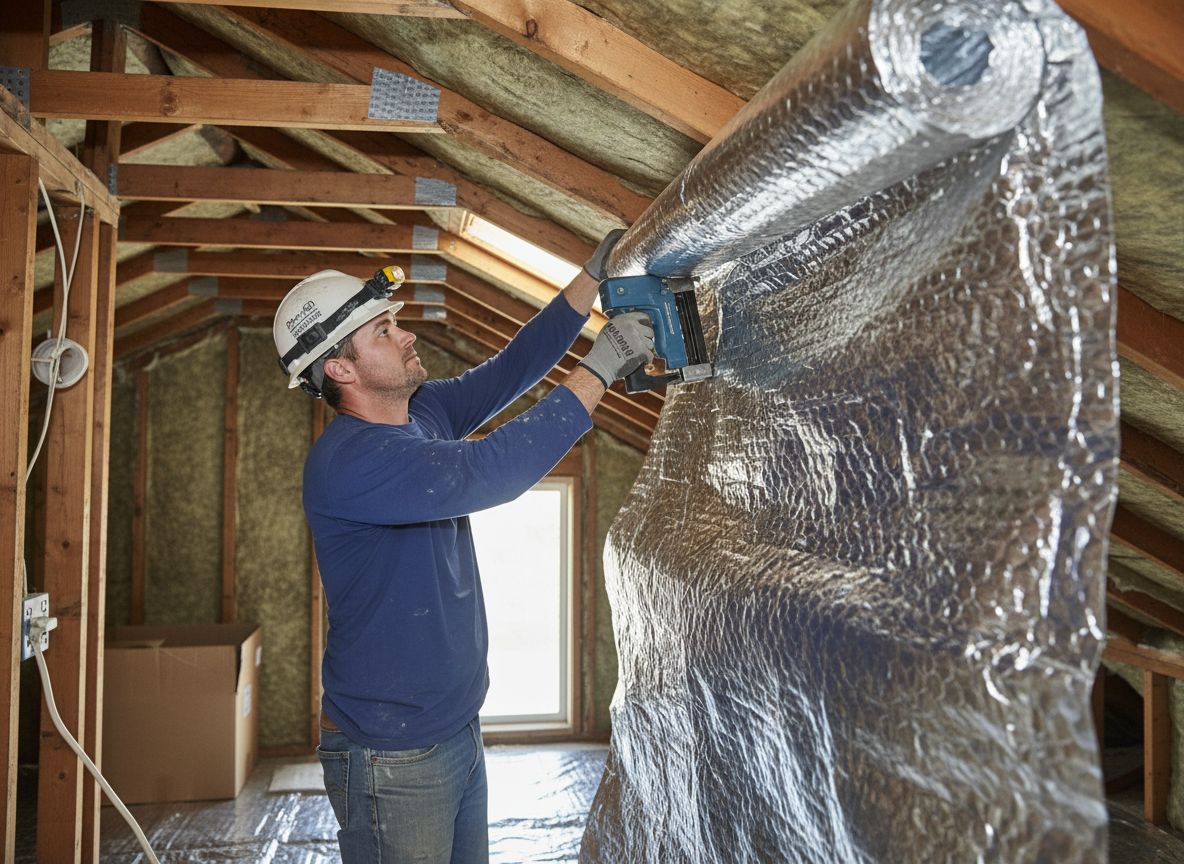
Double bubble insulation consists of two layers of polyethylene bubbles sandwiched between reflective foil surfaces that redirect radiant heat rather than absorb it. In Midvale homes near the Bingham Junction TRAX Station, many attics from the 1960s and 1970s have open rafters and minimal existing material, so the thin profile of double bubble fits without compressing ventilation channels. Installers must maintain at least one inch of air space on the foil side facing the roof deck to preserve its reflective performance during the hot summer months typical in Salt Lake County.
Semi-arid conditions bring fine dust that settles on rafters and can reduce foil reflectivity if not removed before stapling. Crews working in Old Town Midvale routinely vacuum or wipe surfaces first, especially in homes close to Midvale City Park where wind carries extra grit. Proper perimeter sealing around penetrations prevents the material from acting as a moisture trap during the occasional heavy winter storms that drop several inches of snow on West Jordan and Murray rooftops.
Utah energy code requires attic insulation to meet minimum R-values, and double bubble is often layered over existing fiberglass in older Salt Lake County stock rather than used alone. Edge cases include cathedral ceilings common in Bingham Junction remodels where the material must be cut precisely around collar ties without creating gaps that allow convective loops. Homeowners sometimes staple directly to the deck, which collapses the necessary air gap and negates most of the radiant benefit.
Fastening schedules matter on steep pitches found in some Old Town Midvale roofs; too few staples allow sagging over time, while over-fastening creates thermal bridges. The 24/7 availability from the Fort Union Boulevard shop lets crews respond quickly when homeowners discover missing sections during spring inspections before summer heat arrives.
Technician insight
In Midvale the thing that catches most people out with double bubble insulation is the fine dust that coats rafters in homes near the Bingham Junction TRAX Station; if you don't wipe it off the foil loses reflectivity fast during our dry summers and the material starts to sag on the low-pitch roofs common in Old Town.
Old Town Midvale Attic Retrofit
Homeowner in Old Town Midvale noticed summer attic heat bleeding into living space. We found existing fiberglass compressed and full of dust with no radiant layer. Installed double bubble over the existing material after cleaning rafters and maintaining air gaps around collar ties. Result was noticeably cooler upstairs during the next warm spell without changing ventilation.
How it works
- 1
Site Assessment
Measure attic square footage, check existing ventilation, and note rafter spacing in homes throughout Bingham Junction and Old Town Midvale.
- 2
Surface Preparation
Remove dust and debris from rafters, confirm one-inch air gap clearance, and seal gaps around pipes and wires.
- 3
Material Installation
Cut double bubble sheets to fit, staple with proper spacing, and overlap seams by six inches using foil tape.
- 4
Final Inspection
Verify air gaps, check perimeter seals, and confirm no compression occurred during placement.
Pricing
Pricing varies by attic size, access difficulty, and whether layering over existing insulation is required.