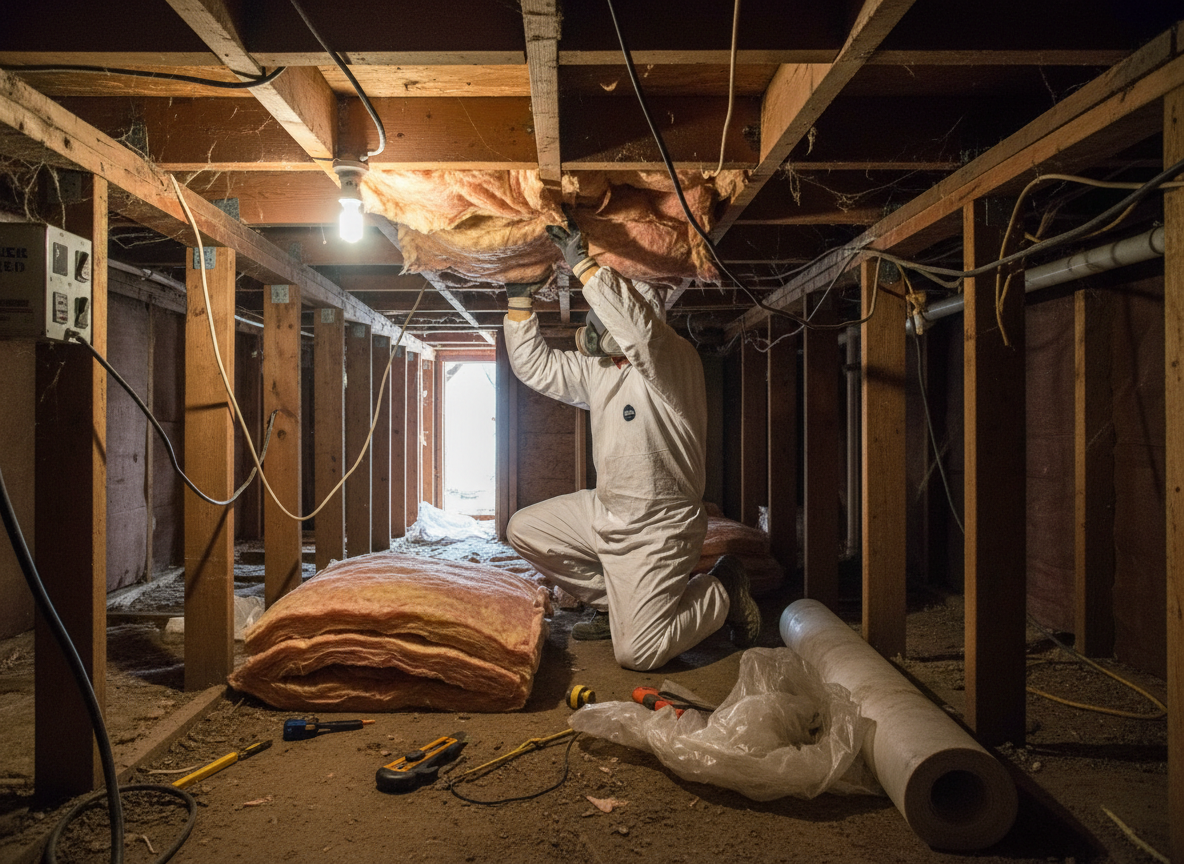
Midvale homes built before the 1980s in Old Town Midvale and near Bingham Junction TRAX Station often sit on raised foundations with crawl spaces that pull in cold air during winter. These spaces lose heat fast because the semi-arid climate brings sharp temperature swings between freezing nights and warmer days. Proper insulation here means choosing vapor-retardant materials that handle both the dry summers and the occasional winter moisture from snowmelt running off the Wasatch foothills.
Salt Lake County building practices in areas like Murray and West Jordan frequently left crawl spaces uninsulated or only partially covered. When temperatures drop, pipes in these spaces freeze more easily if the ground remains bare. We check for existing vents, soil contact points, and any low spots where water can pool before placing insulation, because a single missed gap turns the whole job into a heat-loss problem again by February.
Homeowners near Midvale City Park sometimes discover that their crawl spaces connect directly to laundry rooms or garages without proper sealing. That layout lets dust and outdoor air move freely. We focus on sealing those transition points first, then adding insulation that stays in place even when the ground shifts slightly from the freeze-thaw cycles typical in this part of the valley.
Technician insight
In Midvale, the thing that catches most people out with crawl space insulation is the shallow frost line combined with older homes in Old Town Midvale that have dirt floors sitting only eighteen inches below the joists. Snowmelt from the foothills often finds its way under the foundation before spring, so any insulation job that skips a thorough moisture check ends up wet by March.
Old Town Midvale Crawl Space
A 1960s home near Midvale City Park had uninsulated crawl space joists letting cold air reach the kitchen floor. We found gaps at the rim joist and damp soil near the front foundation wall. After installing vapor retarder and fitting insulation around the ducts, the floor stayed noticeably warmer through the next freeze.
How it works
- 1
Site Assessment
We inspect the crawl space access, existing insulation, moisture levels, and ductwork in homes throughout Old Town Midvale and Bingham Junction.
- 2
Moisture Control
Any standing water or damp soil is addressed before insulation is installed to prevent future mold issues common after winter snowmelt.
- 3
Material Placement
Rigid foam boards or batts are fitted between joists and along the rim joist, paying special attention to corners near the foundation walls.
- 4
Sealing and Verification
All seams and penetrations are sealed, then the space is checked for consistent coverage before the job is complete.
Pricing
Cost depends on crawl space size, access difficulty, and whether moisture repairs are required first.