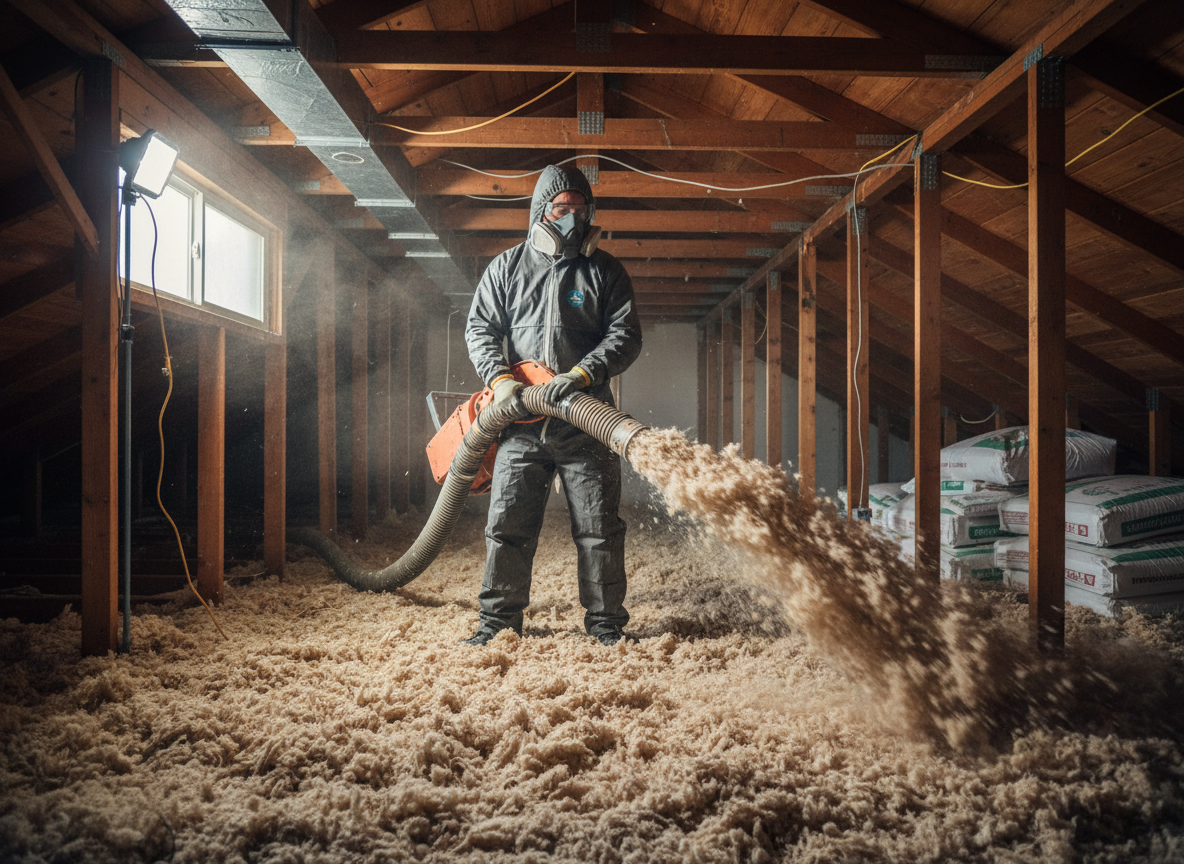
Midvale sits in the semi-arid climate of Salt Lake County with cold winters that drive heat upward through attics. Older homes in Old Town Midvale and Bingham Junction often have settled or missing insulation from earlier decades, while newer builds near the Bingham Junction TRAX Station may have gaps around recessed lights and vents. Cellulose fills those voids densely without settling as quickly as fiberglass in the temperature swings between warm summers and freezing nights.
Proper installation requires removing old material first in many pre-1980 houses common along 7200 South. We check for moisture from roof leaks near Midvale City Park and ensure attic ventilation stays clear so cellulose does not absorb humidity during the wetter spring months. Dense-pack cellulose also slows air movement better in the wind-prone areas between Murray and West Jordan.
Homeowners in West Jordan and Murray frequently call after noticing higher winter utility bills once snow sits on roofs for weeks. Cellulose treated with borate resists mold in these conditions and meets current energy code air-sealing requirements when installed with proper baffles at soffits. Access through existing openings avoids disturbing finished ceilings in tight Old Town layouts.
Seasonal Timing
Schedule cellulose work in fall before temperatures drop below freezing so crews can work safely in the attic without rushing. Spring installs after snowmelt let us inspect for ice-dam damage common on north-facing roofs in Bingham Junction.
Common Mistakes
Skipping a full old-insulation removal in 1960s homes leaves cold spots that cellulose cannot fix. Blocking soffit vents with new material traps moisture against roof sheathing during Midvale's freeze-thaw cycles.
Technician insight
In Midvale the thing that catches most people out with cellulose insulation is the settled rock-wool or fiberglass left in 1970s attics around Old Town Midvale; if you blow new cellulose over the top it compresses and leaves cold spots once our winter winds hit the roof.
Old Town Midvale Attic Refresh
Homeowner in Old Town Midvale noticed high heating bills after several cold snaps. We found six inches of settled insulation blocking soffits and covering can lights. Crew removed the old material, installed baffles and light boxes, then blew cellulose to the proper depth. Utility costs dropped noticeably the following winter.
How it works
- 1
Attic Assessment
We inspect access, existing insulation depth, and ventilation in homes throughout Old Town Midvale and Bingham Junction.
- 2
Preparation
Old material is removed where needed, baffles are added, and recessed lights are boxed to meet code before any new cellulose goes in.
- 3
Blow-In Installation
Cellulose is blown to the required depth using hoses routed through the attic access while maintaining even coverage around trusses.
- 4
Final Check
We verify depth, confirm ventilation remains open, and clean up debris before leaving the site.
Pricing
Cost depends on attic size, access difficulty, and whether old insulation must be removed first; call for an on-site assessment.