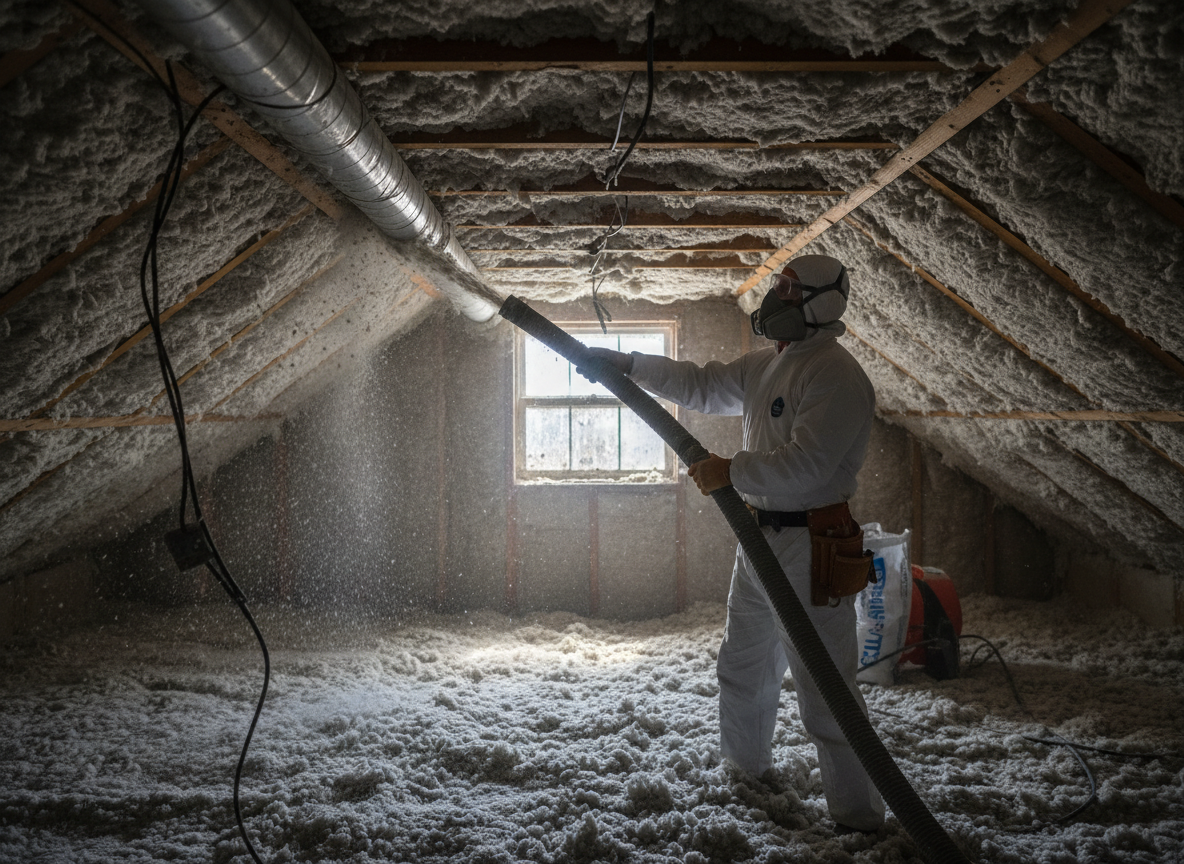
Midvale homes in Old Town and Bingham Junction often feature plaster ceilings over lath in houses built before 1970. These setups trap heat poorly once winters drop below freezing, and the semi-arid air lets cellulose or fiberglass settle faster than in humid regions. Proper ceiling insulation requires checking for knob-and-tube wiring and adding baffles at eaves to maintain airflow, especially near the Bingham Junction TRAX Station where vibration can loosen loose-fill material over time. Skipping vapor retarders on the warm side leads to condensation against the roof deck during warm summer swings.
Salt Lake County code requires minimum R-38 in attics for ceiling insulation work, but many Murray and West Jordan border homes fall short because original batts were compressed during prior renovations. Blown-in options fit irregular joist spacing better than rigid boards, yet installers must avoid blocking recessed lights or bathroom exhausts common in these neighborhoods. In homes near Midvale City Park, tree pollen and dust from the semi-arid summers can contaminate open insulation if not sealed properly during installation.
Edge cases include cathedral ceilings in some Bingham Junction additions where spray foam is needed instead of loose fill to prevent ice dams when temperatures swing. Always verify existing depth before adding material, because over-insulating without ridge venting creates moisture problems in warm months. Homeowners in these areas frequently see drafts along exterior walls when ceiling insulation stops short of the top plates.
Technician insight
In Midvale, the thing that catches most people out with ceiling insulation is the plaster-and-lath ceilings in Old Town homes built before 1960, where adding material without checking for knob-and-tube wiring risks fire hazards, and our cold winters make any gaps along the top plates show up immediately as drafts.
Bingham Junction Ceiling Insulation
Homeowner reported uneven heating in winter near the TRAX station. Inspection showed thin original batts and compressed areas over the ceiling. We added blown cellulose carefully around existing fixtures and wiring. Temperatures stabilized and energy use dropped noticeably the following season.
How it works
- 1
On-site Assessment
Inspect current ceiling insulation depth, wiring, and ventilation in the specific Midvale property.
- 2
Material Selection
Choose cellulose or fiberglass based on joist spacing and any existing plaster conditions.
- 3
Preparation and Safety
Protect fixtures, seal gaps, and confirm no knob-and-tube conflicts before starting work.
- 4
Installation
Apply insulation evenly to required R-value while maintaining airflow paths.
- 5
Final Inspection
Check coverage, seal access points, and confirm no interference with lights or vents.
Pricing
Upfront quotes after inspection; cost varies with home age, access difficulty, and material depth required.