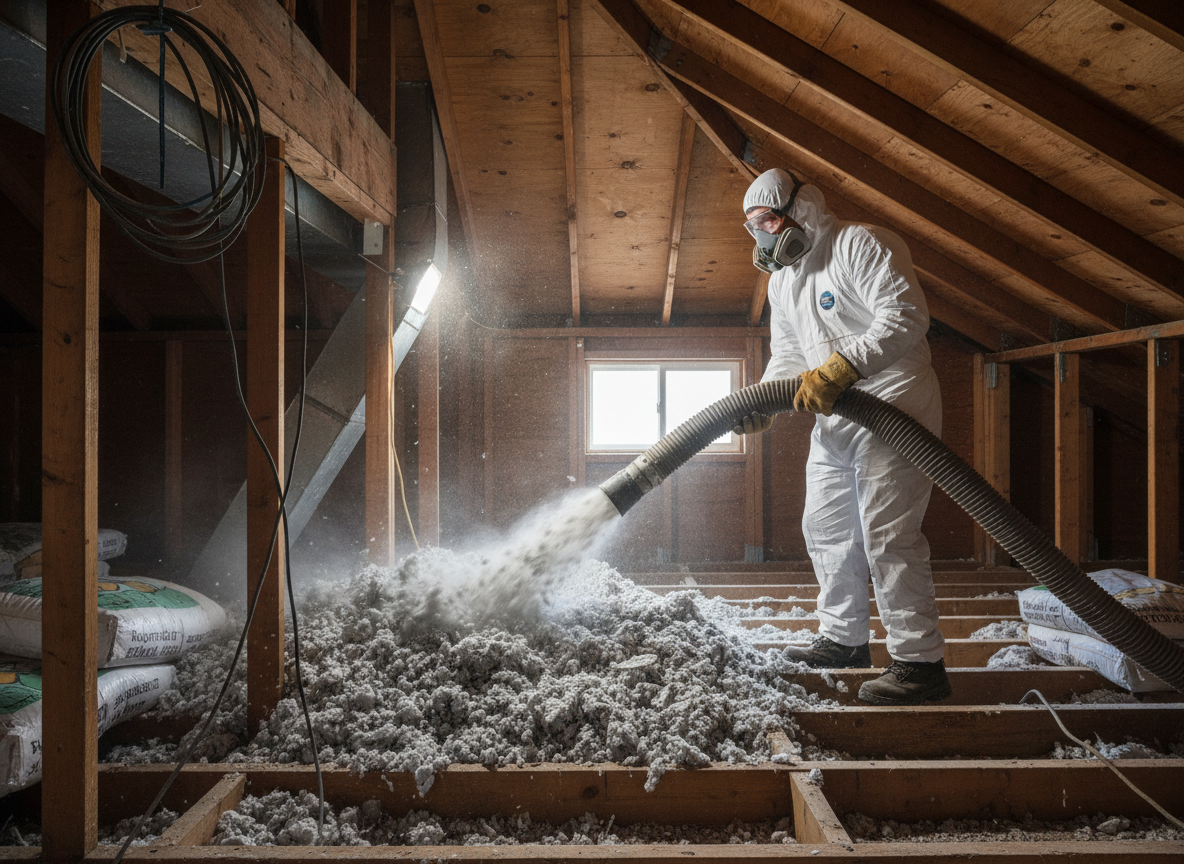
Blown in insulation works well in Midvale because the semi-arid climate brings cold winters that drive heat loss through older attics. Homes in Old Town Midvale and Bingham Junction often have limited attic access and older framing that requires careful material choice between cellulose and fiberglass to avoid settling. Proper depth and coverage around recessed lights and vents prevents moisture issues when warm summer days follow freezing nights.
Technicians must check for existing insulation, wiring, and ventilation before starting because many Midvale houses near the Bingham Junction TRAX Station were built before modern energy codes. Blown in material fills gaps that batts miss but demands precise machine settings to reach the right density without compressing. In Salt Lake County, skipping a vapor retarder check can lead to ice dams when winter temperatures drop and snow sits on roofs.
Edge cases include low-clearance attics common in West Jordan and Murray border homes where hoses must navigate tight joist spaces without disturbing existing ducts. Over-blowing near bathroom exhausts creates airflow blocks that trap humidity. Always verify soffit vents remain open after installation to maintain the balance needed for both winter heating and summer cooling loads.
Technician insight
In Midvale, the thing that catches most people out with blown in insulation is the mix of older homes in Old Town Midvale that still have knob-and-tube wiring running through attics. One wrong pass with the hose and you create a fire hazard that only shows up later when the weather turns cold.
Bingham Junction Attic Fill
Homeowner noticed uneven heating on second floor during winter. Inspection showed thin original insulation and several open soffits. Crew installed blown cellulose to proper depth while protecting existing ducts and restoring vent paths. Heating bills dropped and attic stayed dry through the next freeze-thaw cycle.
How it works
- 1
Attic Assessment
Inspect existing insulation, wiring, and ventilation in Midvale attics to identify gaps and access points.
- 2
Site Preparation
Protect living spaces, seal bypasses, and set up containment before bringing equipment into neighborhoods like Old Town Midvale.
- 3
Material Installation
Blow chosen insulation to target depth and density while working around fixtures and ensuring even coverage.
- 4
Final Inspection
Check depth, clear vents, and confirm no material has entered living areas or blocked airflow.
Pricing
Cost depends on attic size, access difficulty, and material type; upfront quotes provided after inspection.